
Storms, faults and planned outages happen. A tested plan and the right backup mean your vaccines stay protected when the power goes out.
Why power failures matter
A vaccine refrigerator only holds temperature while it has power. Once it stops, how long the cabinet stays in range depends on how full it is, how often the door is opened and the room temperature, so there’s no fixed time you can safely rely on.
The National Vaccine Storage Guidelines ‘Strive for 5’ (4th edition, 2025) treat this as a planning issue. Every immunisation facility must have a back-up plan and alternative storage ready before a power failure occurs, and must practise putting that plan into action.
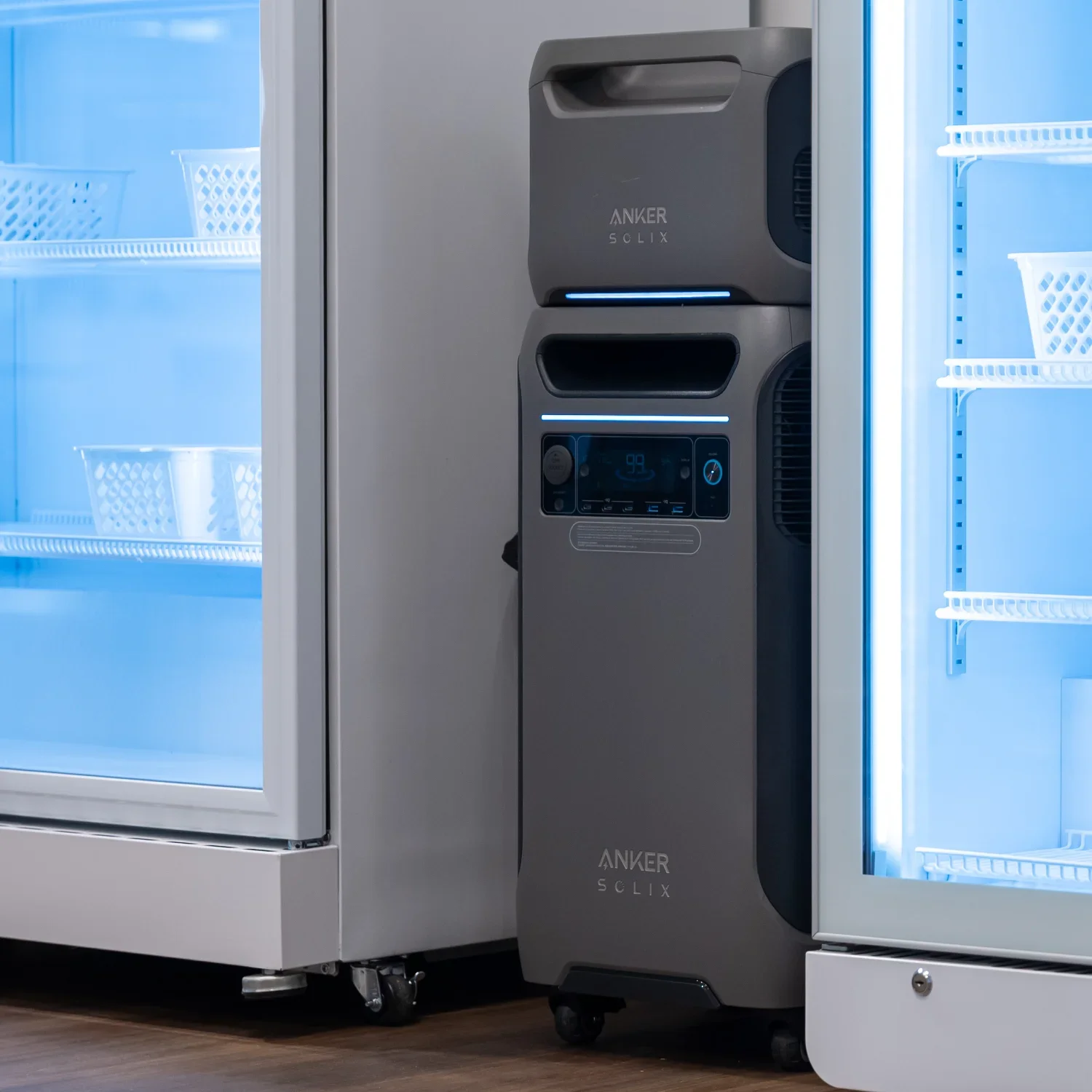
Anker UPS System with Medisafe Plus Fridge
Before an outage: prepare your site
The guidelines suggest a few simple steps that prevent the most common problems:
Protect the power supply. Put a “Do not turn off power or disconnect this refrigerator” sticker on the power point, and a “Do not turn off power before consulting the person responsible for vaccine management” sticker on the meter box. Consider a power point lock, or having the refrigerator wired in.
Arrange backup power. The guidelines suggest back-up power such as a generator or battery backup.
Know your alternative storage. That might be prepared coolers with enough capacity, or an agreement with another facility that has a monitored refrigerator. Put any agreement in place before you need it.
Write it down and test it. Managing a power failure is a required part of your vaccine management protocol, and back-up options should be documented and tested.
Know as soon as the power fails
A power failure overnight or over a weekend is the hardest kind to manage, because no one is on site to notice. AQ Box sends SMS and email alerts to your nominated staff when the power fails, the temperature leaves range or the unit loses connectivity, so someone can respond before stock is at risk.
Keep the refrigerator running with a UPS
A UPS (uninterruptible power supply) is a battery backup that keeps your refrigerator running when mains power drops out. Ours switches over in under 20 milliseconds, so the refrigerator keeps running without interruption. It carries a 5-year warranty and has a 10-year lifespan.
Runtime depends on the refrigerator it’s paired with and how it’s being used. Talk to our team about the runtime for your model.
During an outage
The guidelines set out what to do. In summary:
Leave the vaccines in the refrigerator with the door closed, and put up a sign so no one uses them.
Monitor the temperature from outside the unit, using a battery-operated thermometer or data logger, or your AQ Box readings.
If the temperature is approaching +8°C, or is expected to stay above +8°C for more than 15 minutes, move the vaccines to your prepared, monitored alternative storage.
Never move vaccines without a minimum/maximum thermometer, and never use a domestic fridge, even temporarily.
Appendix 7 of the guidelines is a step-by-step checklist for managing a power failure. Print it and keep it near your refrigerator.
When the power comes back
Confirm the refrigerator is back within +2°C to +8°C before returning any vaccines, then monitor the temperature hourly for 4 hours before going back to twice-daily checks. If temperatures went outside +2°C to +8°C, contact your state or territory health department, and don’t use or discard any vaccines until they advise you.
Power outage checklist
- Power point and meter box labelled
- Backup power in place
- Alerts sent to staff who can respond out of hours
- Alternative monitored storage arranged
- Appendix 7 checklist printed and visible
- Plan documented, tested and known to staff
Source: National Vaccine Storage Guidelines 'Strive for 5', sections 3.6 and 7, and Appendix 7.
Protect your stock through every outage
Add UPS backup and AQ Box alerts to your refrigerator.
